
Ever found yourself staring at a ruler, wondering just how tall 59 inches really is? You’re not alone! This quirky measurement often leaves people scratching their heads, but don’t worry; it’s not as tall as a giraffe or as short as a garden gnome. In fact, 59 inches is a perfectly average height that can spark some interesting conversations.
Understanding Height Measurements
Height measurements provide essential context when discussing stature. Converting units often simplifies comparisons and enhances understanding.
Inches vs. Centimeters
Inches and centimeters are standard units for measuring height. One inch equals 2.54 centimeters. To convert 59 inches to centimeters, multiply by 2.54, resulting in approximately 149.86 centimeters. This conversion clarifies height for audiences familiar with metric systems. Understanding these measurements assists in height comparisons across various contexts, such as clothing sizes and sports statistics.
Common Height Comparisons
Height comparisons help contextualize 59 inches. For example, the average height for adult females in the U.S. is about 64 inches, while for adult males, it’s around 175 inches. Thus, individuals at 59 inches fall below average for adult females and considerably shorter than the average male height. This position allows for diverse discussions about stature in different environments, including athletics and societal perceptions of height.
Real-Life Examples of 59 Inches
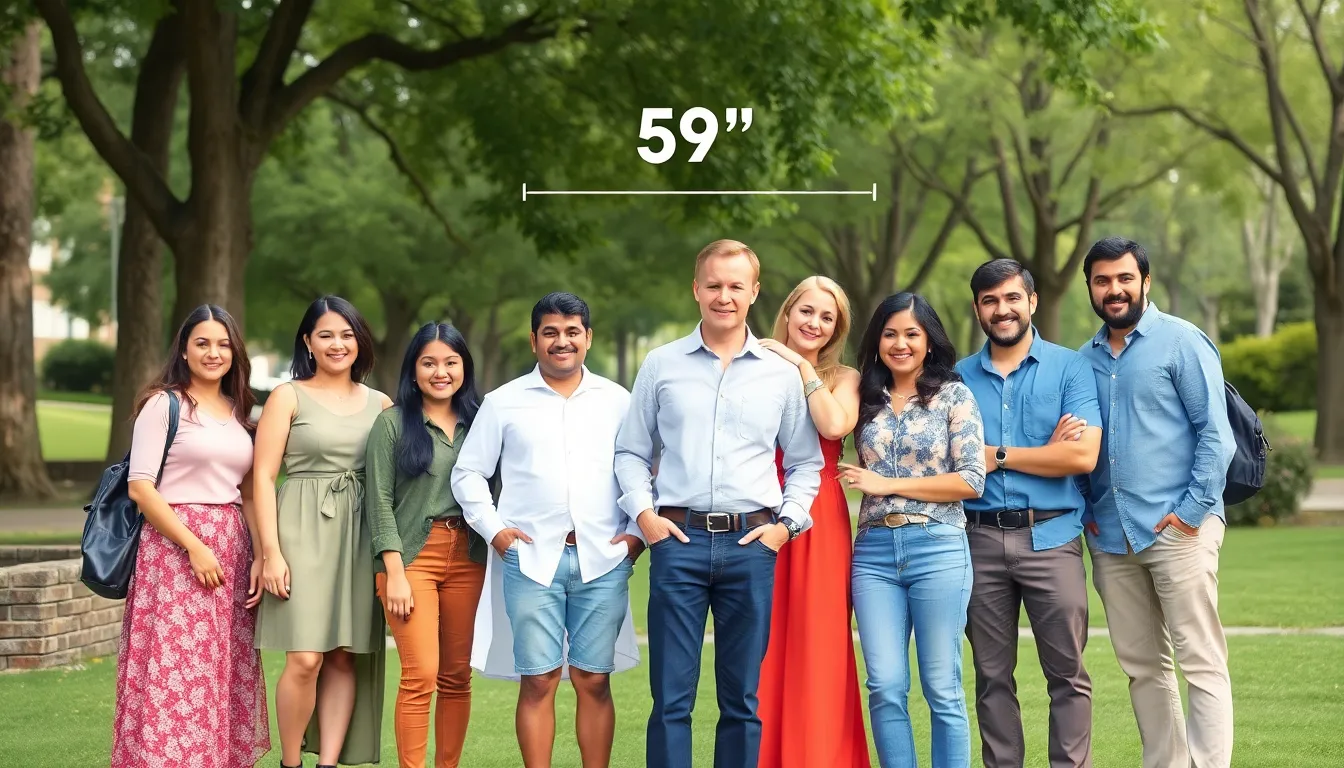

Understanding real-life implications of 59 inches provides helpful context. It represents an average height that fits into various comparisons.
Average Height of Adults
In the United States, average height varies by gender. Adult females typically measure around 64 inches, while adult males average 175 inches. Therefore, someone standing at 59 inches ranks below average among females. Compared to males, this height appears significantly shorter. Individuals of this height might experience unique challenges in contexts like clothing selection and social interactions. Height often affects perceptions, impacting confidence and self-image.
Height in Specific Professions
Certain professions have height requirements that influence career opportunities. In modeling, for example, agencies often seek individuals taller than 59 inches, favoring heights around 5 feet 8 inches or taller. In contrast, professions like certain athletic roles or roles in specific fields allow for greater height variability. Floor fitness trainers, for instance, do not face strict height limitations. Meanwhile, the entertainment industry offers diverse roles for various heights, including those at 59 inches. Understanding height significance aids in recognizing the potential impact on career paths and professional success.
Conversion and Height Perception
Understanding the conversion of height measurements provides clarity around stature. Converting 59 inches into feet results in 4 feet and 11 inches. Since many people utilize feet for height discussions, this conversion helps contextualize height perceptions.
Converting 59 Inches to Feet
To convert height from inches to feet, divide the total inches by 12. Therefore, 59 inches equals approximately 4.92 feet. The decimal indicates that 59 inches falls just below 5 feet, emphasizing its placement in the average height category. Comparisons to everyday objects and people become clearer with this measurement. For instance, many door frames measure about 6.5 feet, surpassing a 59-inch individual in height. This relationship illustrates how perceptions shift when considering different height metrics.
How Height Affects Daily Life
Height influences various aspects of daily life, impacting choices in clothing and activities. Individuals at 59 inches may find specific shops and styles more accessible than others. Reachability often becomes a concern; simple tasks like reaching high shelves may prove challenging. In social interactions, height can affect perceptions of authority and confidence. Shorter stature sometimes leads to assumptions about strength or capability. In professional settings, height influences roles in fields such as modeling and sports, where height requirements can limit opportunities. Understanding these nuances helps clarify how height affects daily experiences.
Cultural Perspectives on Height
Height perceptions vary significantly across cultures, influencing how individuals view stature. In many Asian cultures, shorter heights are often associated with youthfulness, while Western societies may place a premium on taller individuals, especially in professional settings.
Height in Different Cultures
Cultural views on height shape social interactions and personal self-esteem. In some countries, being shorter can be seen as attractive, often tied to cultural ideals and norms. Conversely, height is considered an asset in nations like the United States and several European countries, impacting various sectors such as business and sports. An individual’s height can influence their leadership opportunities, where taller individuals might be favored in authoritative roles.
Media Representation of Height
Media representation reinforces societal standards regarding height. Many movies and commercials showcase tall actors and models, creating a stereotype that associates height with success and attractiveness. Popular culture often highlights characters who embody idealized height, suggesting that taller figures possess qualities like confidence and authority. This portrayal can affect how individuals perceive their value and capabilities, particularly for those who are 59 inches tall, as media often lacks diversity in height representation.
Height is more than just a number; it shapes experiences and perceptions in various aspects of life. At 59 inches, individuals navigate a unique space that blends average stature with distinct challenges. From clothing choices to social interactions, height influences confidence and self-image.
Cultural perspectives further complicate how 59 inches is viewed, with different societies placing varying importance on height. While some may see it as a limitation, others might appreciate the attributes associated with shorter heights.
Understanding these dynamics can empower those who stand at 59 inches to embrace their height and recognize its role in shaping their identity and opportunities.